Updated: July 2026
A Complete Price Guide for VIP Airport Transfers in Bali
- Vehicle Class: Costs vary from premium sedans like a Mercedes E-Class to luxury vans such as the Toyota Alphard.
- Destination Zone: A short trip to Seminyak is priced lower than a 90-minute journey to Ubud or Uluwatu.
- Service Inclusions: All-inclusive rates cover tolls, parking, and amenities, while add-ons like fast-track immigration are extra.
The moment the jet bridge door opens, the air changes. It’s thick, warm, and carries the unmistakable scent of Bali—a complex blend of frangipani, clove-infused kretek smoke, and the faint, sweet smell of distant offerings. You navigate the bustling corridors of I Gusti Ngurah Rai International Airport (DPS), a hub that processed over 20 million passengers in pre-pandemic 2019. The symphony of PA announcements, rolling luggage, and a dozen languages can be disorienting. This is the critical juncture where a Bali holiday is either made or momentarily broken. For the discerning traveler, the chaos of the arrivals hall is not a gauntlet to be run but a spectacle to be bypassed. This is where the true value of a pre-arranged, high-end transfer service becomes not just a convenience, but a necessity. It’s the first, and arguably most important, investment in your tranquility.
Deconstructing the VIP Transfer: What Are You Actually Paying For?
When you book a premium transfer, you’re purchasing more than just a car ride; you are securing a seamless transition from the controlled environment of an aircraft to the curated calm of your villa or resort. The price tag, which might seem steep compared to a standard taxi, reflects a bundle of services designed for comfort, efficiency, and security. The core component is, of course, the vehicle. We’re not talking about a standard sedan. The fleet for a top-tier Bali Airport Luxury Transfer Concierge — Mercedes BMW Alphard Fleet from DPS includes models like the Mercedes-Benz S-Class, a benchmark in executive travel, or the Toyota Alphard, the undisputed king of luxury people-movers in Asia. These vehicles are meticulously maintained, valeted before each arrival, and often less than three years old. Inside, you’re not just getting a seat; you’re getting chilled mineral water, cold towels to freshen up after your flight, and high-speed Wi-Fi to reconnect. The second critical element is the chauffeur. These are not just drivers; they are professionally trained, English-speaking hosts who understand the nuances of hospitality. They monitor your flight status in real-time, meaning they are there whether you land 30 minutes early or two hours late, with no extra charge. They assist with luggage and navigate Bali’s often-congested roads with an expert’s calm. This curated experience eliminates the typical 20- to 40-minute wait and negotiation process at the official taxi stand during peak hours, transforming a potentially stressful arrival into a serene, welcoming embrace.
The Tiered Pricing Model: From Premium Sedans to Luxury Vans
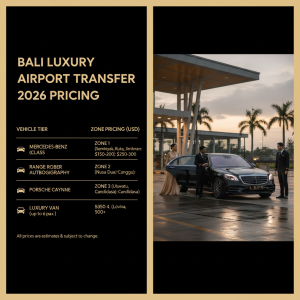
Understanding the pricing structure begins with the vehicle itself. The choice of car directly correlates with both the price and the experience. For solo business travelers or couples, a premium sedan like a Mercedes-Benz E-Class or BMW 5-Series offers a sophisticated and comfortable journey. The cost for such a service to a destination like Seminyak or Nusa Dua typically falls in the $80 to $120 USD range. This tier provides ample space for two passengers and standard luggage, combining executive polish with efficient travel. However, the vehicle I see requested most frequently by seasoned Bali visitors is the Toyota Alphard or its sibling, the Vellfire. With its spacious, captain-chair seating for up to five passengers, superior legroom, and quiet cabin, it has become the gold standard for families and small groups. An Alphard transfer from DPS will generally be priced between $100 and $180 USD, depending on the final destination. Its higher roofline and larger cargo capacity make it ideal for those traveling with multiple suitcases or sporting equipment like surfboards. For larger parties or those requiring maximum space, the Mercedes-Benz Sprinter van is the next step up. Configured for 8 to 12 passengers, these vehicles are essentially private lounges on wheels and can cost upwards of $200 USD. The key takeaway is that the price reflects the asset: an Alphard can represent a capital investment of over $80,000 USD for the operator, a cost that dictates the premium service fee.
Zonal Pricing: Why a Trip to Uluwatu Costs More Than to Seminyak
The second major factor dictating the price of your transfer is geography. Bali, while appearing small on a map, is an island of challenging and unpredictable traffic. A 40-kilometer journey here is not the same as a 40-kilometer drive on a European motorway. Consequently, reputable transfer companies utilize a zonal pricing system based on the estimated time and distance from Ngurah Rai Airport (DPS). Zone 1 typically includes the closest resort areas: Kuta, Legian, Seminyak, and Jimbaran. These destinations are roughly 8-12 kilometers from the airport and, traffic permitting, can be reached in 20-30 minutes. This is your baseline price. Zone 2 pushes further out to hubs like Nusa Dua, Sanur, and the increasingly popular Canggu. These trips cover 15-25 kilometers and can take anywhere from 45 to 75 minutes, warranting a moderate price increase. The journey to Nusa Dua, for instance, is expedited by the Bali Mandara Toll Road, a 12.7-kilometer marvel built over the sea, but the fee is factored into your cost. Zone 3 is where you see a more significant price jump. This includes cultural heartland Ubud and the cliffside paradise of Uluwatu. Both are approximately 35-45 kilometers away and require a 90- to 120-minute drive, often through dense local traffic. Finally, Zone 4 covers the remote and beautiful northern and eastern coasts—areas like Amed, Tejakula, or Pemuteran. These transfers are essentially half-day charters, covering over 90 kilometers and taking 3-4 hours, and are priced accordingly. As a traveler, you can find information about these destinations on Indonesia’s official tourism website to better plan your stay and corresponding transport needs.
The ‘All-Inclusive’ Promise: Unpacking Hidden Fees and Gratuities
One of the hallmarks of a genuine VIP service is price transparency. The quote you receive should be the final price you pay. A professional bali airport luxury transfer will always operate on an all-inclusive basis. This means the fee covers every predictable cost associated with your journey from the airport terminal to your hotel lobby. This includes airport parking fees, which can accumulate if your flight is delayed, all road toll charges like the aforementioned Bali Mandara Toll Road (currently IDR 13,000 for a car), fuel, and the driver’s time. Less scrupulous operators might lure you with a low base rate, only to add on surcharges for late-night arrivals (typically after 10 PM), extra luggage, or even waiting time. A premier service absorbs these variables. Another point of consideration is gratuity. In Indonesian culture, tipping is not obligatory but is genuinely appreciated for excellent service. For a private luxury transfer, if the chauffeur has been particularly helpful—perhaps by providing insightful local knowledge or navigating a difficult route smoothly—a tip of around IDR 100,000 to 150,000 (approximately $7-$10 USD) is a generous and well-received gesture. However, you should never feel pressured. The primary cost of your transfer is an investment in a stress-free experience, and a reputable company ensures that investment is protected from unexpected and unprofessional last-minute fees, allowing you to relax the moment you meet your driver.
Beyond the Transfer: The Value of a Concierge Service
The most elite airport transfer services in Bali have evolved beyond simple logistics; they are now mobile concierge desks. The value embedded in their pricing extends far beyond the drive itself. Your chauffeur is often your first point of contact with Balinese hospitality and a font of curated local knowledge. This is where a service distinguishes itself. A great chauffeur can offer recommendations for a local warung with the most authentic babi guling, suggest a less-crowded time to visit Tanah Lot temple, or explain the cultural significance of the canang sari offerings you see everywhere. They can also provide practical assistance. Need a local SIM card? It can be pre-purchased and waiting for you. Need to exchange a small amount of currency for immediate use? They can guide you to a reputable money changer, avoiding the notoriously poor rates at the airport. This service is invaluable for first-time visitors. For instance, a knowledgeable driver can provide a fascinating introduction to Bali’s unique irrigation system, the Subak, which is a designated UNESCO World Heritage site. This level of personalized service, initiated from the moment you book your bali airport luxury transfer, transforms a mundane task into an integral and enriching part of your travel experience. It’s the difference between being a tourist and traveling as a guest.
Quick FAQ on Bali VIP Transfer Pricing
During my years covering luxury travel, a few questions consistently arise regarding Bali’s premium transport. Here are the quick, definitive answers I provide to my readers.
Is it cheaper to book a VIP transfer in advance or on arrival?
Booking in advance is unequivocally the better option. It guarantees vehicle availability, especially for sought-after models like a Toyota Alphard during high season. More importantly, it secures a fixed price. Attempting to book a comparable luxury vehicle upon arrival can lead to inflated “on-the-spot” rates, which can be 20-30% higher, not to mention the added stress of negotiation after a long flight.
Do prices change during high season?
Yes, they do. Like hotels and airlines, transfer operators implement dynamic pricing. Expect a peak season surcharge of 15-25% during Bali’s busiest periods. These typically include the Australian school holidays in June and July, the August rush from Europe and North America, and the end-of-year period from mid-December to early January. Booking several months ahead can sometimes lock in off-season rates.
How much is the VIP Fast-Track Immigration add-on?
The VIP Arrival Service, often called “fast-track,” is a separate add-on that significantly enhances the arrival experience. This service, where an agent meets you at the aerobridge and personally escorts you through an expedited immigration and customs line, typically costs between $50 and $75 USD per person. It can easily save you 60-90 minutes of queuing during peak arrival times, making it a worthwhile expense for many.
Can I hire the vehicle and driver for a full day?
Absolutely. All premier transfer companies offer their vehicles for private charter. This is a highly recommended way to explore the island in comfort. A typical 10-hour charter for a Toyota Alphard, including a driver and fuel for travel around the southern part of the island, will generally cost between $150 and $250 USD. It provides immense flexibility and is often more cost-effective than taking multiple one-way taxis.
Ultimately, navigating the complexities of ground transportation upon arriving in a new country sets the tone for your entire trip. Opting for a premium transfer service in Bali is a decision to prioritize comfort, security, and time. It’s an acknowledgment that the luxury of your holiday should begin the moment you step off the plane, not just when you check into your hotel. By understanding the components of the price—the caliber of the vehicle, the distance to your destination, and the inclusive nature of the service—you can make an informed choice that ensures your arrival on the Island of the Gods is as serene and beautiful as the place itself. Experience the ultimate bali airport luxury transfer by exploring our curated fleet and allow us to handle the details while you anticipate the journey ahead.